

ฮงฮวด
14 September, 2026
Share this article


Surfactants Are Closer to Us Than You Think, The Science Behind the Products We Use Every Day
Surfactants, or surface-active agents, are essential ingredients that help water and oil work together effectively to remove dirt and impurities. Although we may not notice them, surfactants are present in many of the products we use every day—from shampoos, liquid soaps, and toothpaste to dishwashing liquids, laundry detergents, and various household cleaning products.
What Do Surfactants Do?
Surfactants help reduce the surface tension of water, allowing it to spread more easily and make better contact with surfaces. They also help capture and remove dirt, grease, and other impurities from surfaces.
Beyond cleaning, surfactants play important roles in various formulation functions, including foaming, emulsification, solubilization, and dispersion of ingredients.
Surfactants in Everyday Products
🧴 Hair Care
Surfactants help cleanse the hair and scalp while providing suitable foam and sensory properties. They are commonly used in products such as shampoos and conditioners.
🧼 Personal Care
Surfactants help remove excess oil and impurities while taking skin mildness into consideration. They are widely used in products such as soaps, toothpaste, and facial cleansers.
🍽️ Dishwashing
Surfactants help effectively remove oil and grease from dishes and other kitchenware.
👕 Laundry
Surfactants help loosen dirt from fabric fibers and allow impurities to be washed away. They are commonly used in laundry detergents and fabric softeners.
🏠 Home Care
Surfactants enhance cleaning performance on a variety of surfaces. They can be found in products such as floor cleaners, bathroom cleaners, and multipurpose household cleaners.
Discover Surfactants Through KAO Products
Surfactants can be classified into several types based on their charge and functional properties. Examples of KAO products used in various industrial applications include:
🔵 Anionic Surfactants
Anionic surfactants are well suited for formulations that require effective cleaning performance and foam generation.
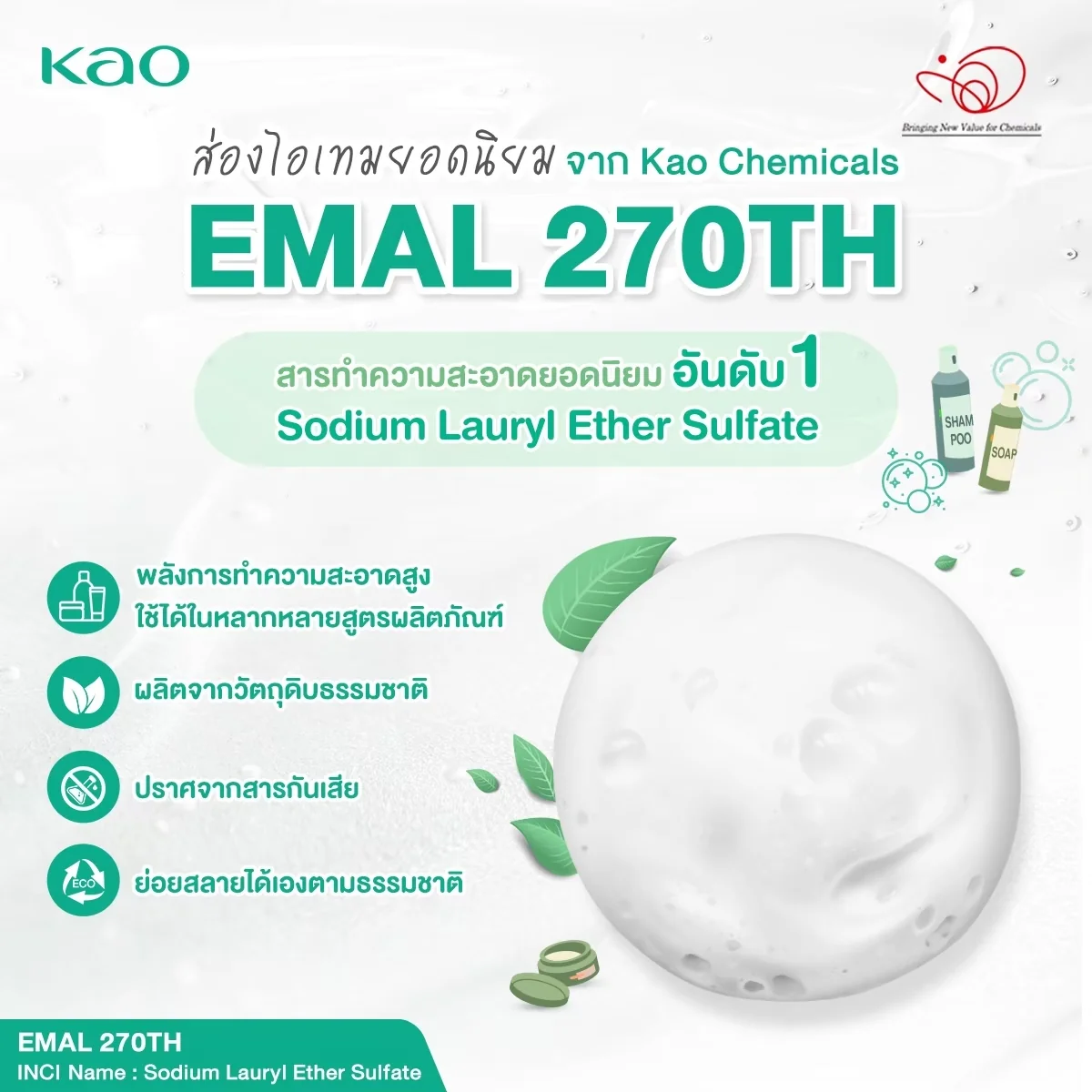
EMAL® – A range of Alkyl Sulfates and Polyoxyethylene Alkyl Ether Sulfates.
Examples include Sodium Lauryl Sulfate (SLS) and Sodium Laureth Sulfate (SLES), which are widely used as cleansing and foaming agents in Personal Care and Home Care formulations.
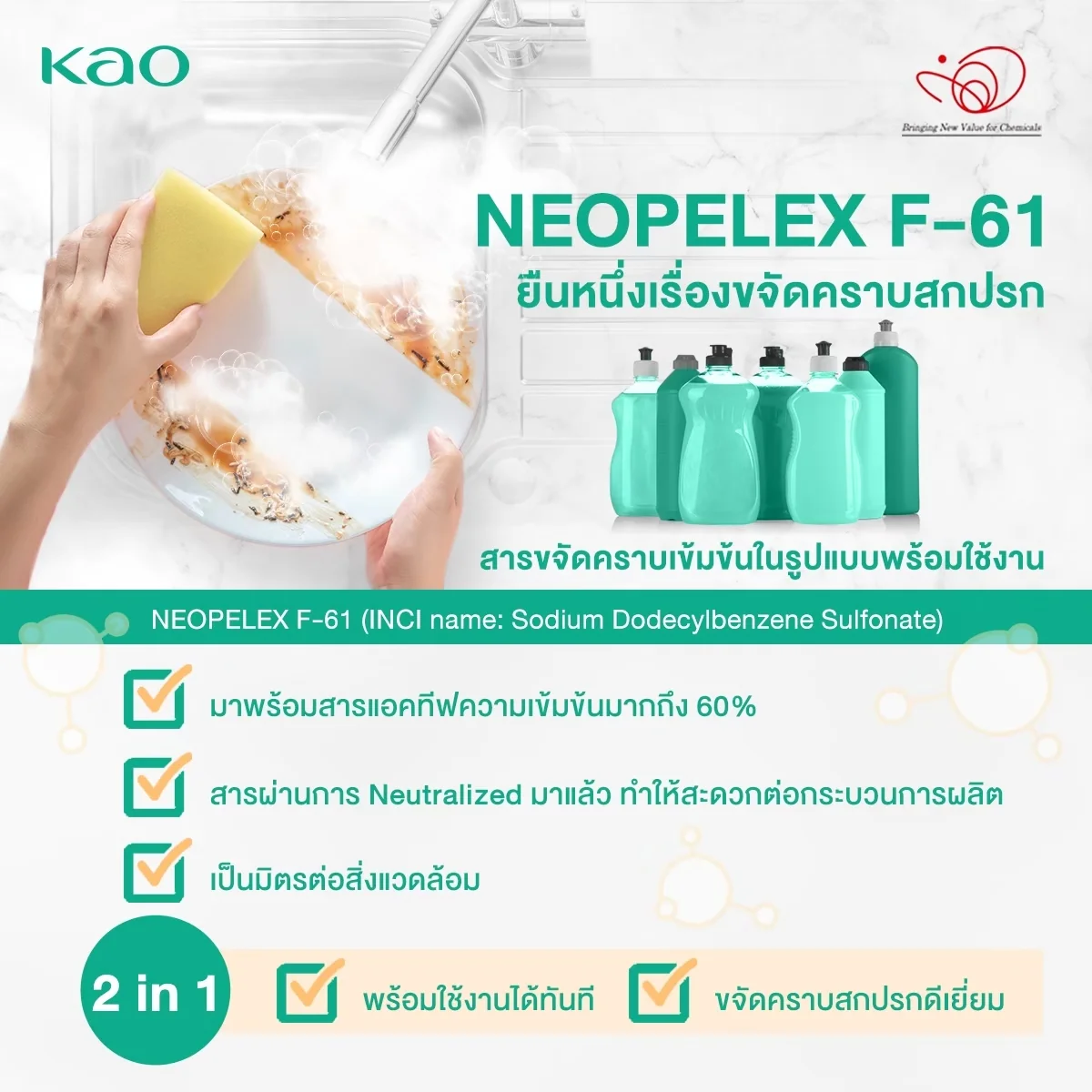
NEOPELEX® – A range of Alkylbenzene Sulfonates.
Examples include Linear Alkylbenzene Sulfonic Acid (LABSA) and Sodium Dodecylbenzene Sulfonate, which are suitable for various cleaning products such as dishwashing liquids, laundry detergents, floor cleaners, and heavy-duty detergents.
🟢 Amphoteric Surfactants
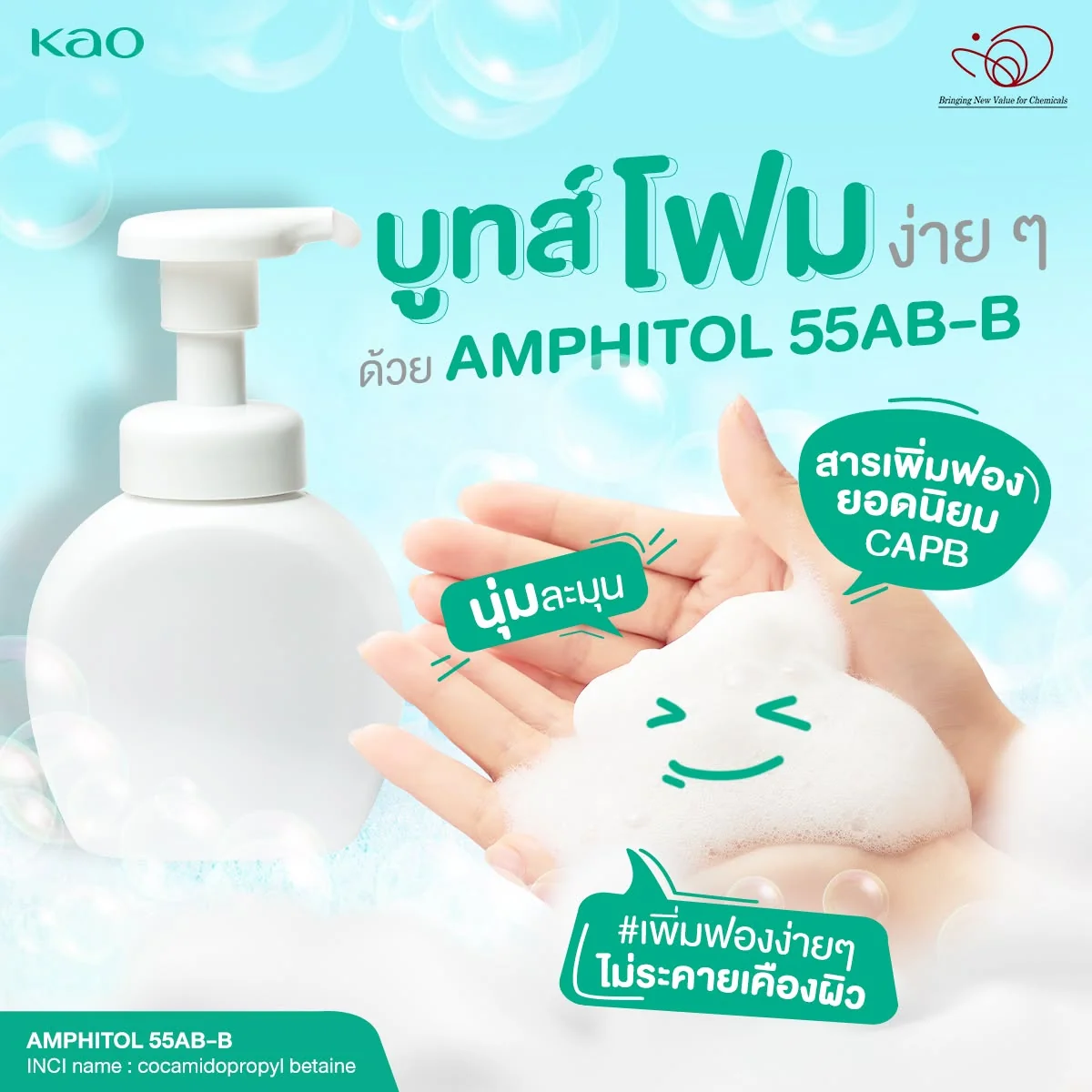
Amphoteric surfactants are suitable for formulations that require foam boosting as well as improved sensory properties and mildness.
AMPHITOL® – Examples include Lauryl Dimethyl Amine Oxide and Lauryl Hydroxysultaine, which can be used as foam boosters and co-surfactants in cleansing formulations.
🟠 Nonionic Surfactants
Nonionic surfactants are suitable for applications that require properties such as emulsification, solubilization, and dispersion.
EMULGEN® and RHEODOL® are examples of Nonionic Surfactants and Functional Surfactants from KAO. They can be applied in a wide range of formulations depending on the specific properties and performance requirements of each grade.
Choosing the Right Surfactant for Your Product
Each type of surfactant offers different properties and performance characteristics. Selecting the right surfactant therefore requires consideration of various factors, including cleaning performance, foam generation, mildness, compatibility with other ingredients, and the desired properties of the finished product.
Find the Right Surfactant for Your Product
Explore surfactant solutions that match your formulation needs and application requirements. Click!
Related Posts

21 Oct 2026
Clove Oil: The Charm of Spicy Aromas in Product Innovation
Clove Oil: The Charm of Spicy Aromas in Product Innovation Clove Oil is a distinctive natural ingred...

16 Oct 2026
Menthol Crystal: The Essence of Intense Cooling Freshness
Menthol Crystal: The Essence of Intense Cooling Freshness Elevate Your Formulations with Natural Men...

16 Oct 2026
What Is Camphor? A Deep Dive into Its Properties, Mechanism of Action, and Applications
Getting to Know Camphor: The Science Behind Its Distinctive Aroma Camphor is a familiar ingredient f...